
From Mud Pies to ipads -Reclaiming the Outdoors for Today's Children
Outdoor Play and Child Development:
Balancing Modern Childhood

Post by Dr. Stephen Wise, PsyD
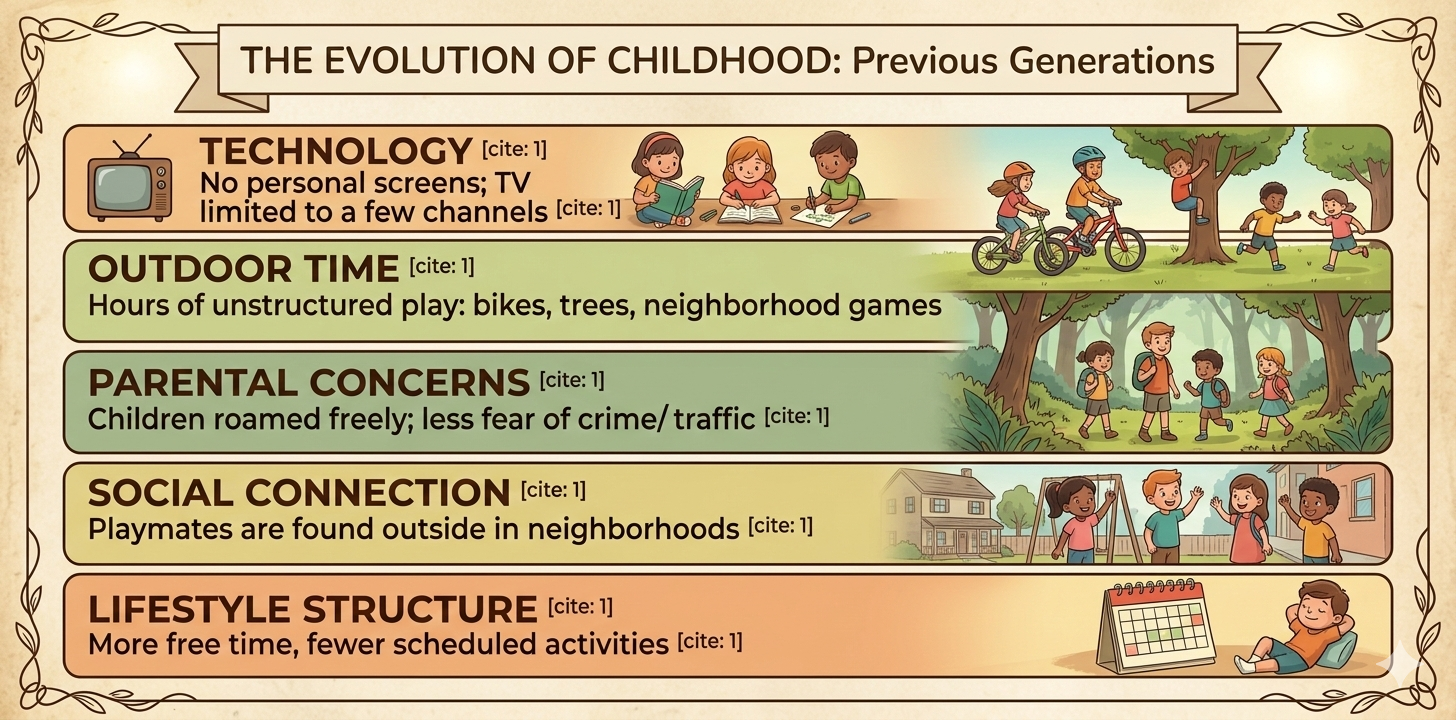
In the blazing heat of a Florida summer, my mother’s voice became the soundtrack of our childhood chaos: “You boys need to get out from under my feet!” She’d stood her ground in the kitchen like a warrior queen over her stovetop empire. That command was our evacuation notice, and we took it seriously—because in the 1960s, staying inside was punishment. Our RCA black-and-white television limped along with four or five channels, each chosen by a sad little dial that frequently vanished. In its place? A pair of oversized pliers—the true patriarch of our living room. The point is, there was nothing interesting going on inside, yet the outdoors wielded never-ending opportunities for childhood adventure, peppered with a grain of mischief.
In the 60s and 70s, summer meant real freedom. We left the house at sunrise and spent the whole day exploring, without any adults watching over us. The only rule was to be home before dark. There were no check-ins, no tracking devices, and no one keeping tabs. We had trust, sunshine, and endless adventures. Life felt open and exciting, even if we didn’t realize how lucky we were at the time.
Of course, times have changed. The world seems louder, faster, and more complicated now. But kids still need that kind of unstructured, messy, character-building play. They need the chance to go outside, get dirty, scrape a knee, and maybe even their dignity, while figuring out who they are without adults planning every moment. Those carefree days shaped us. Even though the world has changed, that spirit of freedom is still something worth sharing.
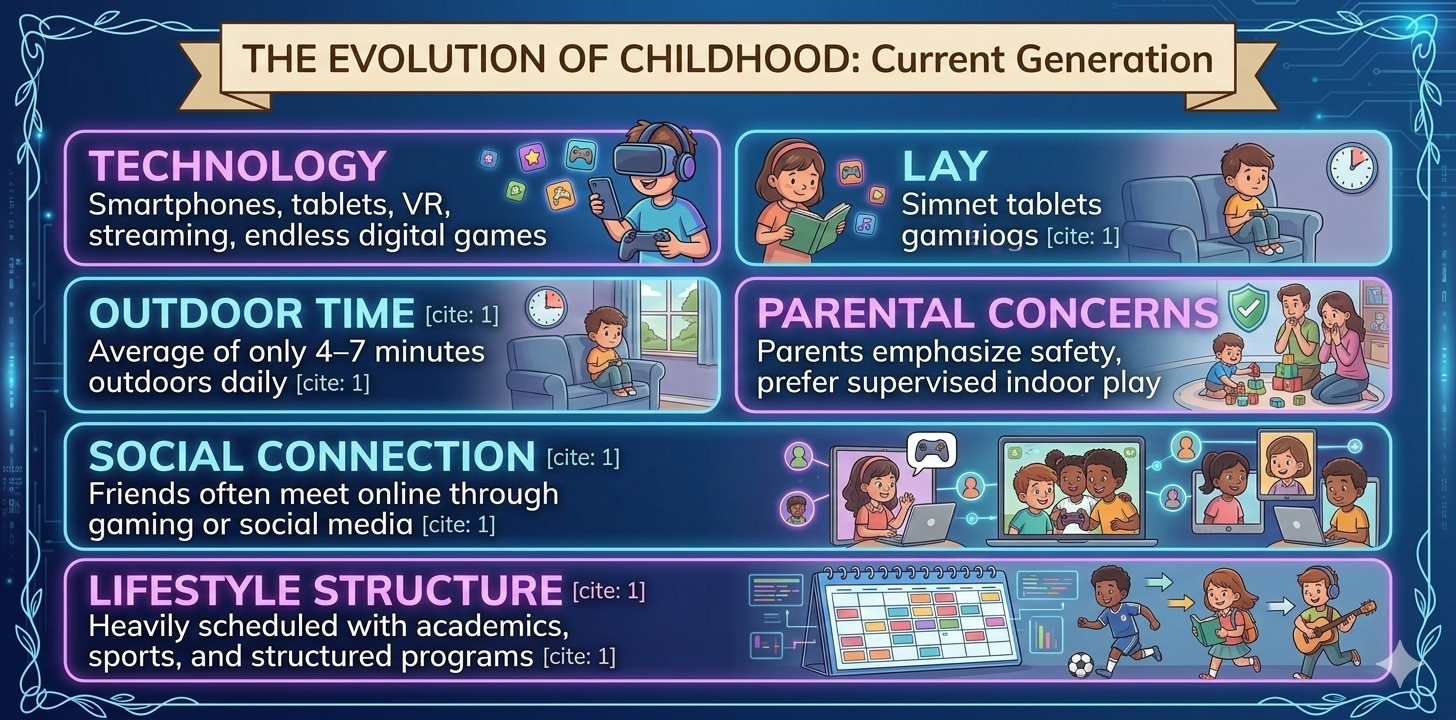
So where are we now, 60 years later? In 1965, childhood was about freedom, imagination, and playing outside. By 2025, it’s more focused on screens, routines, and safety. This shift stems from changes in our culture, such as greater technology, more careful parenting, and busier schedules. Kids who spend most of their time indoors can miss out on important chances to build emotional skills, creativity, and social connections. Outdoor play is still essential for resilience, identity, and mental health.
Imagine childhood as a big playground with two doors. One door opens to the great outdoors—trees, mud pies, bikes, and endless sky. The other door swings into the indoors—screens glowing, toys neatly stacked, and endless adventures that fit inside four walls. Today, more children are choosing the inside door. Why? Because inside feels like a carnival that never closes. Video games offer instant rewards, cartoons stream endlessly, and friends are just a click away. Indoors is safe, predictable, and always available—no matter the weather or the time. Parents too often breathe easier when kids are inside. The world outside can feel unpredictable: traffic, strangers, scraped knees. Indoors offer control and comfort. Add in busy schedules and structured routines, and outdoor play sometimes gets squeezed out.
Staying indoors is efficient and convenient, but being outside offers a richer, more lasting experience. Running through grass, climbing trees, or making up games with friends helps kids build resilience, creativity, and calm in ways screens can’t. The goal isn’t to choose one over the other, but to find balance. Let the indoors be a place for fun and connection, but keep the outdoors as the space where kids can stretch their imagination, grow stronger, and learn to explore the world.
Why Indoors Became More Appealing in 2026
- Digital Entertainment:
Kids today can use iPads, VR, and online games to enter interactive worlds. These give instant rewards and new experiences that outdoor play can’t match.
- Safety & Supervision:
In 2025, parents are more careful about things like traffic, crime, and accidents. Playing indoors feels safer and more predictable, while being outside seems riskier.
- Convenience:
Playing indoors works in any weather and fits into busy routines. Outdoor play needs time, daylight, and often a parent to watch.
- Peer Influence: Social life is now mostly online. Kids connect with friends through games and social media, so indoor spaces have become the main place for interaction.
- Commercial Indoor Spaces: Places like trampoline parks, indoor playgrounds, and themed centers now compete with the open-ended fun of playing outside.
I’m writing this article because, in my work, I’ve noticed my young clients rarely talk about playing outside or show me a scratched arm from climbing a tree. Kids today aren’t spending enough time outdoors, and this change affects their physical, emotional, and social growth. Even as playgrounds are changing to attract kids again, the real challenge is finding a balance between the pull of digital play and the lasting benefits of outdoor exploration.
Key Psychological Benefits
of Outdoor Play
- Stress Reduction & Emotional Regulation:
Playing outside lowers cortisol, the stress hormone, which helps kids feel calmer and more resilient. Natural light and fresh air also improve sleep quality, which is important for emotional stability.
- Improved Mood & Mental Health:
Spending time outdoors is linked to better moods, less anxiety, and a lower risk of depression. I believe that too much time indoors can lead to feeling sad. Studies show that children who play outside regularly are happier and have better emotional well-being.
- Creativity & Imagination:
Unstructured outdoor play encourages imaginative thinking—turning sticks into swords, trees into castles, or playgrounds into adventure zones. This kind of symbolic play fosters problem-solving and cognitive flexibility. In my day, we needed to create our own adventures and make our own accessories, whether it was building a fort from old boards and straw or digging a hole and covering it with whatever we could find.
- Focus & Attention:
Nature works like a mental reset. Playing outside helps kids focus and concentrate, which leads to better learning in school. Imagination also grows when children create their own activities.
- Social Skills & Cooperation: Playing outside often involves group activities like tag, building forts, or team sports. These experiences teach kids to cooperate, negotiate, and solve conflicts, which are harder to learn when playing alone indoors.
- Connection to Nature & Identity: Being outside helps kids feel connected to the natural world. This builds empathy, environmental awareness, and a stronger sense of self.


Summary
Kids today spend much less time outdoors than we ever imagined. Busy schedules, safety concerns, and the pull of screens have made spontaneous, barefoot adventures a thing of the past. In the 1960s, parents often just said, “See you at dinner.” We wandered, explored, got into a little trouble, and somehow, we all made it through.
Remember my old RCA black-and-white TV? It was about as exciting as a cinder block (except for Bonanza on Sunday night!). There was no way it could compete with climbing trees or racing down the street on a bike with shaky brakes. Looking back, I’m glad about that. If the TV had been more interesting, I might have missed out on so many memories. Except for the day I tried to heat chocolate chip cookies over an open fire in the Australian pine forest near my house. I thought I was a cooking protégé, but really, I was just a kid with matches and too much confidence. Genius didn’t show up that day, but the fire department surely did! I’m still amazed at how quickly those long pine needles took off into a blaze.
So, just remember that those messy, unpredictable outdoor moments are important. They help kids build strength, coordination, imagination, and real problem-solving skills you can’t get from an app. Nature helps kids relax, focus, and discover who they are. Even boredom, that old childhood friend, can inspire creativity when kids are free to explore—ideally without anything that can catch fire. This article isn’t here to blame parents. Instead, it offers simple, hopeful ideas for restoring some balance.
Letting kids have some unstructured outdoor time, taking them to the park, or just encouraging them to explore the backyard can help them reconnect with the world beyond screens. Kids are naturally curious and love to explore. Sometimes, all they need is a little time, some open sky, and freedom to wander, and remember this: nature is the only support that does not ask anything in return!